
Chad's Galactic Mining Empire
Octocube GamesSimulation
4.2100.00 Reviews
- Version
- Varies With Device
- Installs
- 10.00K
- Age Rating
- Teen
Screenshots
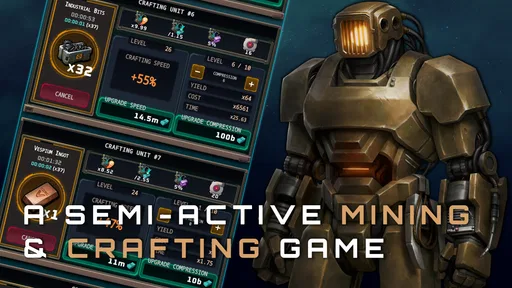
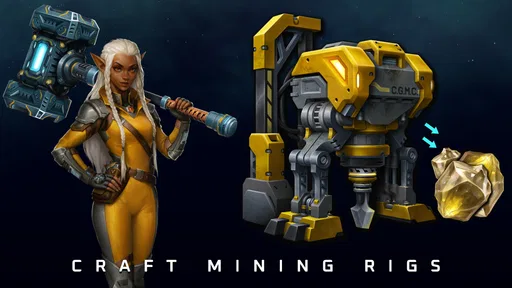
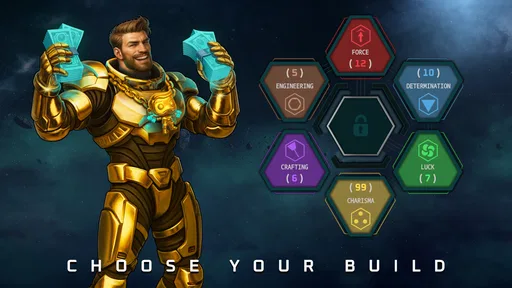
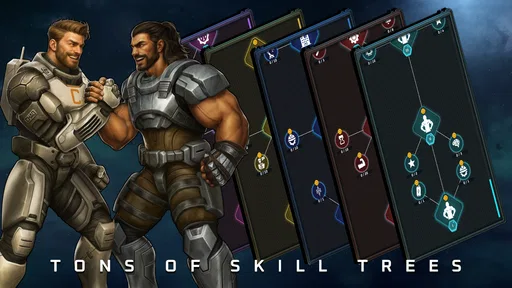
Our Review of Chad's Galactic Mining Empire
 Analysis by Appyee
My first impression of Chad's Galactic Mining is that it understands the appeal of a mining game immediately: there is something satisfying about looking at a stubborn piece of geology, hitting it again, and watching a slow project become a useful resource. This is a free simulation game from Octocube Games, built around mining, crafting, and incremental progress in a spacefaring setting. I found it most appealing when I treated it as a game to check repeatedly rather than one to rush through in a single sitting.
The basic fantasy is easy to grasp. You are not simply collecting coins from a menu; you are building progress by working through a mining-and-crafting loop with a deliberately oversized, playful attitude. That gives the game a different mood from a quiet farming simulator or a purely numerical idle title. It wants the act of breaking material to feel like the center of the experience, while crafting gives those gathered resources a reason to matter.
It is worth setting expectations early. This is not a story-heavy space adventure where every session delivers a new dramatic event. Its pleasure comes from accumulation, repetition, and the gradual sense that your operation is becoming more capable. If you enjoy watching small improvements compound, the design has a natural pull. If repeated actions without constant novelty make you impatient, the same structure may feel slow.
How the mining world establishes its identity
The setting does useful work because it gives the incremental format a clear visual and thematic frame. Galactic mining sounds broader than digging in a conventional quarry, and that scale helps the game feel like more than a resource counter with a space background. The setting suggests distance, unusual materials, and an operation that can keep expanding, even when the moment-to-moment action is focused on a single piece of geology.
I also like the contrast between the grand setting and the direct physical verb at the heart of the game. The premise is not vague exploration for its own sake. You are there to smack geology, turn the results into crafted progress, and keep the cycle moving. That blunt, slightly comic attitude gives the game a recognizable voice. It avoids presenting mining as a dry spreadsheet exercise, even though the underlying rhythm depends heavily on numbers and repetition.
The art direction works best when it keeps that contrast visible: a large cosmic premise paired with a tactile, almost mischievous approach to extraction. I would not choose this game for realistic astronomy or a serious science-fiction narrative. Its space setting is a stage for the mining fantasy, not a replacement for one. That is a strength when you want something approachable, but a limitation if you are looking for lore, character drama, or a carefully simulated universe.
One practical way to read the visual language is to pay attention to how each new material or crafting step changes your sense of progress. In a game like this, the most important visual question is not whether every screen is spectacular; it is whether the world makes your next target feel understandable. When I could quickly connect a mined resource with a crafting purpose, the setting felt coherent. When the focus shifted toward waiting for accumulation, the atmosphere became more abstract and menu-driven.
That change between hands-on extraction and passive-looking progress is central to the experience. It is also why I would recommend playing with a clear personal goal for each visit. Instead of opening the game and tapping without direction, I found it more satisfying to decide whether I was gathering for a particular crafting need, improving the pace of my operation, or simply checking how far a long-term project had advanced.
A setting that suits short, repeatable visits
The galactic premise makes sense for a game that you revisit in small portions. Mining operations naturally suggest preparation, extraction, processing, and another trip back to the resource. That gives short sessions a reason to exist. I could imagine opening the game during a commute or while waiting for an appointment, making a few decisions, and leaving with a clear next objective rather than needing a long uninterrupted block of time.
That convenience comes with a trade-off. A short-session structure can make progress feel pleasantly manageable, but it can also reduce the sense of occasion. Players who want every session to contain a major discovery may find the repeated loop too restrained. The game is better understood as a companionable routine: check the operation, make a useful adjustment, collect or create something, and return later.
Sound, pacing, and the mood of repeated work
The most important part of the audio and pacing relationship is how much weight the game gives to each mining action. A mining simulator needs the central interaction to feel readable and rewarding, but it also needs restraint because the player may repeat it many times. If every hit demanded too much attention, the loop would become tiring. If nothing marked the action, the work would feel empty.
My overall impression is that the mood is designed around steady engagement rather than constant excitement. The space setting provides the broad atmosphere, while the mining actions provide the regular pulse. Crafting then acts as a change of pace: it turns a series of individual impacts into a longer-term result. That structure is more important than any single sound or visual flourish because it gives the session a beginning, middle, and reason to continue.
I would describe the pacing as incremental in the literal sense. The game asks me to accept that progress can be meaningful even when it arrives in small portions. That is a good fit for players who enjoy watching a process develop, but it requires patience. The most useful mindset is not “How fast can I finish this?” but “Which improvement will make the next few visits more productive?” Once I approached it that way, the rhythm felt less like waiting and more like managing a small ongoing project.
There is also a subtle mood difference between active and passive play. Active mining gives the game a more physical identity, while periods of accumulation make it resemble a traditional incremental game. Neither side is automatically better. The appeal depends on whether you enjoy moving between tactile input and planning. I found the combination more interesting than either approach alone, although players seeking uninterrupted action should know that the game’s identity is not built around nonstop intensity.
A useful habit is to avoid judging the game during a single brief burst of tapping. The design makes more sense over several visits, when you can see how a small resource decision affects crafting and later progress. That does not remove the repetition, but it gives the repetition a purpose. In my experience, the game feels strongest when I use the active portion to prepare the next decision instead of treating every tap as the entire point.
Why the rhythm will divide players
The same loop that makes the game easy to revisit may feel too repetitive for someone who needs frequent mechanical surprises. This is not a flaw that can be solved by a better tutorial or a faster opening minute; it is a question of genre fit. The game’s mood depends on repetition becoming comfortable. If you dislike incremental games in general, the galactic presentation probably will not be enough to change your mind.
On the other hand, players who enjoy low-pressure progress may appreciate that the game does not need to be treated like a competitive action title. You can approach it as a background hobby, a small daily routine, or a project to optimize when you have more attention available. That flexibility is one of its better qualities, especially for people who want a simulation game that can sit alongside a busy schedule.
Where mining and crafting fit together
The mechanical core is clearest when mining and crafting are treated as two halves of one decision. Mining supplies the raw material, but crafting gives the material direction. Without that second step, the game would risk becoming a simple collection exercise. With it, each resource can be understood as part of a chain: gather what is needed, decide what deserves priority, and turn the result into progress that supports the next round.
That structure creates a small but important planning question: should I focus on the immediate reward or prepare for a more useful later conversion? I found this more engaging than blindly spending everything as soon as it appeared. A good workflow is to pause before crafting, identify which result will improve the next few actions, and only then commit the materials. That habit helps prevent the common incremental-game problem of making progress feel random.
The trade-off is that crafting can make the game feel less instantly rewarding. Mining gives direct feedback, while crafting asks me to think about value over time. Players who want every action to produce an obvious payoff may prefer a simpler arcade-style mining game. Players who enjoy planning will likely find more depth in deciding how to use what they have collected.
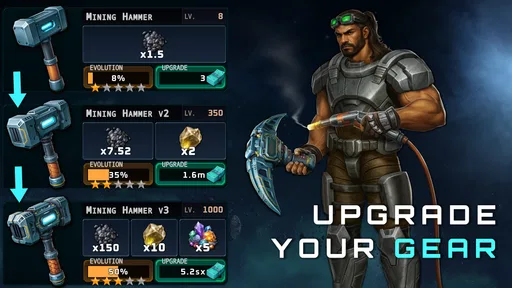
I would also avoid assuming that the fastest-looking upgrade is always the best choice. In an incremental system, an improvement that saves effort repeatedly can be more valuable than a one-time reward, while a crafting result that opens a new direction may be preferable to a small immediate boost. Even without turning the game into a spreadsheet, comparing the next few visits rather than the next few seconds makes the decisions feel more intelligent.
One of the less obvious strengths is that the game can serve different levels of attention. When I have only a moment, I can treat it as a quick check-in. When I have more time, I can think about resource priorities and the order of crafting decisions. That layered use is more practical than a system that requires full concentration every time, and it helps explain why the game has attracted a modest but visible audience, with over ten thousand installs and a four-point-two average from hundreds of ratings.
Those figures suggest that the concept has found people who enjoy its particular blend of mining and incremental simulation, but they should not be mistaken for a guarantee that the pacing will suit everyone. The game’s audience is likely to be self-selecting: people who already enjoy resource loops will understand its appeal more quickly than players arriving from a story-led space game.
Spending, patience, and the free-to-play question
The game is free to start, which makes it easy to test whether the mining rhythm works for you before spending anything. Optional purchases range from ninety-nine cents to thirty-nine dollars and ninety-nine cents per item. I would approach those offers carefully and decide first whether the underlying loop is enjoyable without acceleration. A purchase can make sense for someone who wants to support the developer or reduce friction, but it cannot turn an unwanted repetitive structure into a different genre.
My advice is to play long enough to identify what is actually slowing you down. If the problem is a confusing priority, spending will not solve it; changing your crafting plan may. If the issue is simply that you do not enjoy returning to the same operation, paying for faster progress may only shorten the time before the same dissatisfaction appears. The free entry point is therefore valuable as a trial, not just as a price advantage.
Families should also note the Teen content rating. That does not tell me how every individual player will respond to the tone, but it does mean I would not present the game as automatically suitable for young children. For adult players and older teenagers who like simulation loops, the rating is less of a concern than the game’s patience requirement and optional spending structure.
Who should play it, and who should choose something else
I think Chad's Galactic Mining is a good match for someone who likes incremental games but wants a stronger physical theme than a plain upgrade menu. It is also suitable for players who enjoy crafting as a way to give collected resources meaning. The space setting adds personality, while the mining premise keeps the objective simple enough to understand without a large story commitment.
A realistic everyday use case would be a short evening routine. I might open it after dinner, check what the operation has produced, decide which material is worth pursuing next, and use the available resources on a crafting step that improves tomorrow’s session. On a bus ride, I could make a few active decisions without needing to remember a complicated plot. The game works well in that space between a fully passive idle title and a demanding action game.
I would skip it if my priority were a deep narrative, detailed character development, or constant exploration. A conventional space adventure would be a better choice for those needs. I would also look elsewhere if I wanted a competitive mining game with rapid reflex challenges, because this experience is more concerned with steady accumulation than with testing reaction speed.
Compared with a standard idle game, this one has a more concrete fantasy: the resources come from geology, and crafting gives the loop a workshop-like purpose. Compared with a traditional crafting survival game, it is more approachable and less demanding because the focus is not on maintaining a large living world. The compromise is that it may offer less freedom than a sandbox and less spectacle than an action game. Its best position is between those alternatives, where routine management and themed resource work matter more than dramatic variety.
New players should resist trying to optimize everything immediately. First, learn which actions feel satisfying and which crafting choices support that feeling. Then establish a simple priority, such as improving the part of the loop you use most often. This prevents the early experience from becoming a blur of taps and purchases. It also makes it easier to tell whether the game’s central rhythm genuinely suits you.
My verdict on the atmosphere and the long-term loop
What holds the experience together is the relationship between its setting and its pace. The galactic backdrop gives the mining operation room to feel ambitious, while the direct, playful approach to geology keeps it from becoming too solemn. The sound and rhythm support a mood of steady work rather than frantic danger, and the crafting system gives that work a reason to continue.
The result is not a game I would recommend universally. Its appeal depends on accepting repetition as part of the pleasure. I enjoyed it most when I viewed each visit as one step in an ongoing operation, not as a demand for immediate spectacle. The game rewards attention to priorities, but it does not require every session to become a serious optimization exercise.
Octocube Games has created a focused simulation experience with a clear identity. The free price makes experimentation easy, while the Teen rating and optional purchases are worth keeping in mind before recommending it to younger players or spending money. Its audience size is still relatively modest, with more than ten thousand installs and roughly a hundred written reviews, so I would treat it as a specialized choice rather than an established universal favorite.
My recommendation is simple: try it if the idea of turning repeated mining into a calm, space-themed crafting routine sounds appealing. Give the free version enough time to reveal whether the gradual rhythm works for you, and make decisions based on long-term usefulness rather than the quickest visible reward. If you want a relaxed resource project with a distinctive mining mood, it is worth a look. If you need a story, fast action, or constant novelty, another game will serve you better.
Verdict
Strengths of Chad's Galactic Mining Empire
- Simple controls make mining easy to learn on mobile devices.
- Progression systems provide clear goals during short play sessions.
- The space-mining theme gives the game a distinctive visual identity.
- Offline-friendly gameplay suits players who want entertainment without constant internet access.
- Upgrades create a satisfying sense of improvement over time.
Limitations of Chad's Galactic Mining Empire
- Resource collection can become repetitive after extended play.
- Some upgrades may require considerable grinding to unlock.
- The interface can feel crowded on smaller phone screens.
- Limited strategic depth may disappoint experienced management-game players.
- Performance and battery use may vary on older devices.
Similar Picks in This Category
View All
Truckers of Europe 3
Wanda Software4.3

Town Building Life Simulator
XGame Global4.2

Fidget Toys Trading・Pop It 3D
Freeplay Inc4.7

Sculpt People
CrazyLabs LTD4.4

Scary Teacher 3D
Z & K Games4.2

Hair Tattoo: Barber Shop Game
CASUAL AZUR GAMES4.3
Frequently Asked Questions
What is Chad's Galactic Mining Empire about?
Chad's Galactic Mining Empire is a space-themed mining and management game in which you expand an interstellar operation by extracting valuable resources from planets, asteroids, or other cosmic locations. You typically use collected materials to upgrade equipment, unlock new areas, improve production, and build a larger galactic business. The appeal comes from combining idle progress with strategic decisions about expansion and resource management.
Can I play Chad's Galactic Mining Empire offline?
Whether the game works fully offline may depend on the version and the feature being used. Basic mining or progression systems may continue without a constant connection, but advertisements, cloud saves, events, leaderboards, purchases, and certain online rewards can require internet access. Before traveling or playing with limited data, it is best to test the installed version in airplane mode and confirm which features remain available.
Is Chad's Galactic Mining Empire free to download and play?
Chad's Galactic Mining Empire may be available as a free download, but free access does not always mean that every feature is completely unrestricted. Games in this genre commonly include optional in-app purchases, rewarded advertisements, premium currency, or upgrade bundles. You can usually make progress without spending money, although purchases may shorten waiting times or accelerate development. Check the store listing for current pricing and age information.
Does Chad's Galactic Mining Empire contain advertisements or in-app purchases?
Players should expect that the game may use advertisements and optional in-app purchases as part of its progression and monetization system. Ads can sometimes provide bonuses such as extra resources, faster production, or additional rewards, while purchases may offer currency, boosters, or upgrade packages. If you are concerned about accidental spending, enable purchase authentication on your device and review the available parental-control settings.
What devices are compatible with Chad's Galactic Mining Empire?
Compatibility depends on the operating system, device architecture, available storage, and the minimum version supported by the developer. Before downloading, open the official Google Play or App Store listing and check the requirements shown for your phone or tablet. A newer device will generally provide smoother performance, especially as your empire grows and more animated objects, upgrades, and effects appear on screen.
Play our best games!


